
CASE STUDY: Bertie
Supporting Bertie’s Digestive Health and Emotional Resilience
Bertie welcomed me into his home with an enthusiastic wag and an open, friendly curiosity. From the moment the herbs and botanicals were laid out, he was eager to explore, confidently engaging even while his mum and dad stepped out of the room.
The focus of Bertie’s session was twofold: ongoing anxiety and long-standing digestive issues, including IBS, frequent sickness and diarrhoea, for which he currently receives veterinary support. As is often the case, Bertie’s choices throughout the session beautifully reflected the close connection between emotional wellbeing and gut health.
We began gently with aromatic waters (hydrosols). Although initially cautious of the spray bottles, likely due to previous negative associations, Bertie quickly showed positive interest in both orange flower and yarrow waters, licking my hands and relaxing once he realised there was no pressure or force involved.
When presented with botanicals, Bertie made clear and purposeful selections. He chose marshmallow root, barley grass and spirulina, all strongly aligned with digestive and nutritional support. Marshmallow root is commonly selected by animals with gastrointestinal inflammation, as it soothes and protects the stomach lining. Barley grass and spirulina are both rich in essential nutrients, including magnesium, which can be difficult to absorb when the digestive system is compromised and may contribute to anxious behaviour. Bertie’s enthusiasm for these botanicals suggested an instinctive response to what his body needed most.
As we moved on to essential oils, Bertie’s communication became even more expressive. Yarrow was immediately welcomed, with Bertie lying down and unexpectedly offering the inside of his leg for gentle application. This is a good example of animals instinctively guiding their own support. Yarrow is often chosen both for inflammatory discomfort and for helping sensitive dogs feel more emotionally secure.
In contrast, German chamomile was firmly declined, while carrot seed oil was inhaled thoughtfully, accompanied by Bertie repeatedly referencing his rear end, a subtle but telling indication of digestive or absorptive concerns.
To further support the stomach, fennel, sweet orange and peppermint were offered. Bertie clearly preferred the gentler combination of fennel and sweet orange, spending a long time resting and inhaling them together, while choosing to walk away from peppermint. Fennel, in particular, is often selected for spasmodic digestive discomfort, aligning closely with Bertie’s history of IBS.
When emotional support oils were introduced, Bertie’s responses were deeply moving. Jasmine prompted an immediate softening: eyes closed, body fully relaxed, breathing slow and deep. This oil is often chosen by dogs lacking confidence or recovering from early trauma, and it was later confirmed that Bertie had experienced a dog attack in puppyhood. Neroli, already familiar to him, drew him instinctively back to sit close to his mum — a lovely reflection of its association with reassurance and connection.
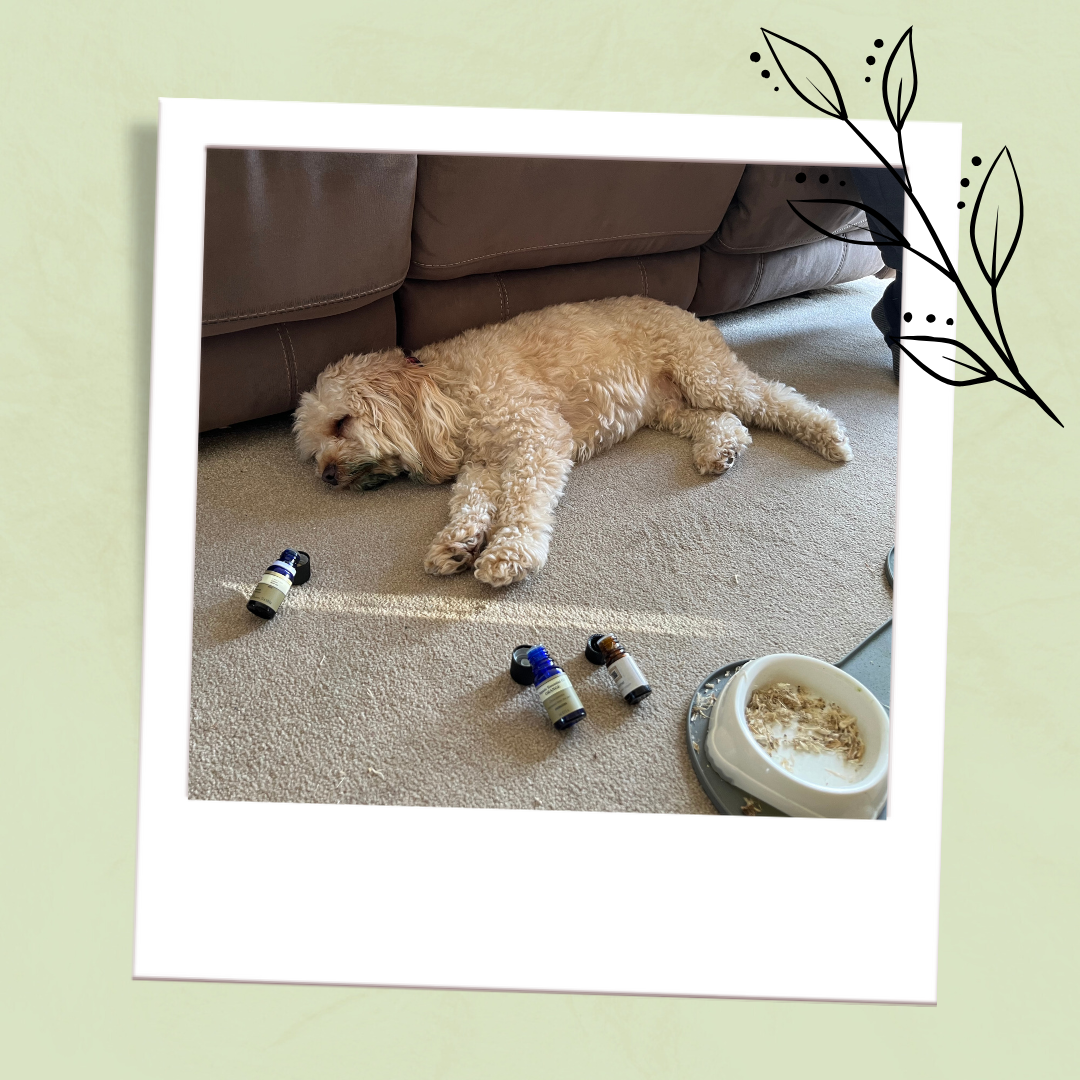
Violet leaf and hops followed, both received with prolonged, peaceful inhalation. Hops, in particular, is often selected by anxious or over-stimulated animals for its sedative and calming qualities. Bertie alternated between these oils, lying on his side with eyes closed for over ten minutes, fully immersed in the support he had chosen.
By the end of the session, Bertie was deeply relaxed and affectionate, gently pawing and seeking closeness from everyone present. We finished with a light mist of orange flower water for reassurance, and left samples of yarrow, jasmine and violet leaf for him to enjoy in his own time.
Outcome and Ongoing Support
Bertie demonstrated clear, confident self-selection throughout the session, choosing botanicals and oils that closely matched both his digestive challenges and emotional needs. His ability to communicate clear preferences shows just how empowering and effective this approach can be.
Moving forward, we agreed to observe how Bertie’s digestion and behaviour responded post-session before deciding on further support. Additional sessions may help deepen the benefits, or his guardians may feel confident continuing gentle support at home using the same principles.
Bertie’s session is a powerful example of how zoopharmacognosy can support dogs with complex, interconnected physical and emotional challenges — offering them choice, autonomy and comfort in a way that is both respectful and profoundly calming.
If your dog struggles with anxiety, digestive issues or sensitivity to stress, a session like Bertie’s could offer valuable insight and support.
